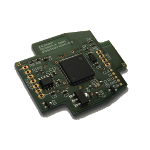
The XMC7200 has two Arm Cortex-M7 cores for primary processing and a Cortex-M0+ core for peripheral and security processing, with a CRYPTO unit for hardware acceleration. Having the unit on the die does not mean TLS is faster. The library has to actually use it, and the default configuration usually does not.
TLS data stream performance on the XMC7200 CRYPTO unit was improved by +33 % over the vendor library, with full compatibility maintained. The measurement and the discussion are documented in the original post on the Infineon Developer Community:
https://community.infineon.com/t5/XMC/XMC7000-CRYPTO-unit-performance/td-p/1024565
Hardware acceleration is not a switch you turn on. The measurable losses come from these places:
On a constrained device, TLS performance is an architectural property, not a library setting. Record size, cipher choice, resumption strategy and the crypto path are decided at design time. Retrofitting them after the link is in production is what turns a performance question into a field problem.
FAQ
No. The gain depends on the operation and on block size. For some operations the software path is competitive, and the overhead of calling the unit can exceed the benefit.
Because the library's default path is the software path. The acceleration layer has to be explicitly integrated, and the integration has to match the buffer and record structure the application actually uses.
The reasoning applies to any MCU with a crypto unit. The specific numbers do not transfer.