Embedded Software Development - Cross-Platform Solutions
Embedded Software Italiano - Embedded Software Deutsch
Hiring a freelance embedded developer is a strategic decision. You need someone who understands hardware constraints, delivers testable code, and communicates clearly — whether in English, Italian, or German. Here is how I approach the five core challenges that define modern embedded projects.
Real-Time Embedded Systems
Real-time systems must meet strict timing guarantees. A brake controller, a drone flight stabilizer, or a medical pump cannot afford latency. I work with bare-metal architectures (for maximum determinism) and RTOS solutions like FreeRTOS, Zephyr, and NuttX. Key techniques I apply:
- Task prioritization and deadline scheduling to prevent priority inversion.
- Interrupt latency analysis to ensure ISRs complete within microseconds.
- Watchdog integration for fail-safe recovery in safety-critical applications. Every real-time system I deliver includes a timing analysis report so you know exactly where your microseconds go.
Cross-Platform Development (Embedded ↔ PC)
Developing firmware directly on hardware slows you down. Every compile-flash-debug cycle costs minutes. Worse, hardware may not be available during early development.
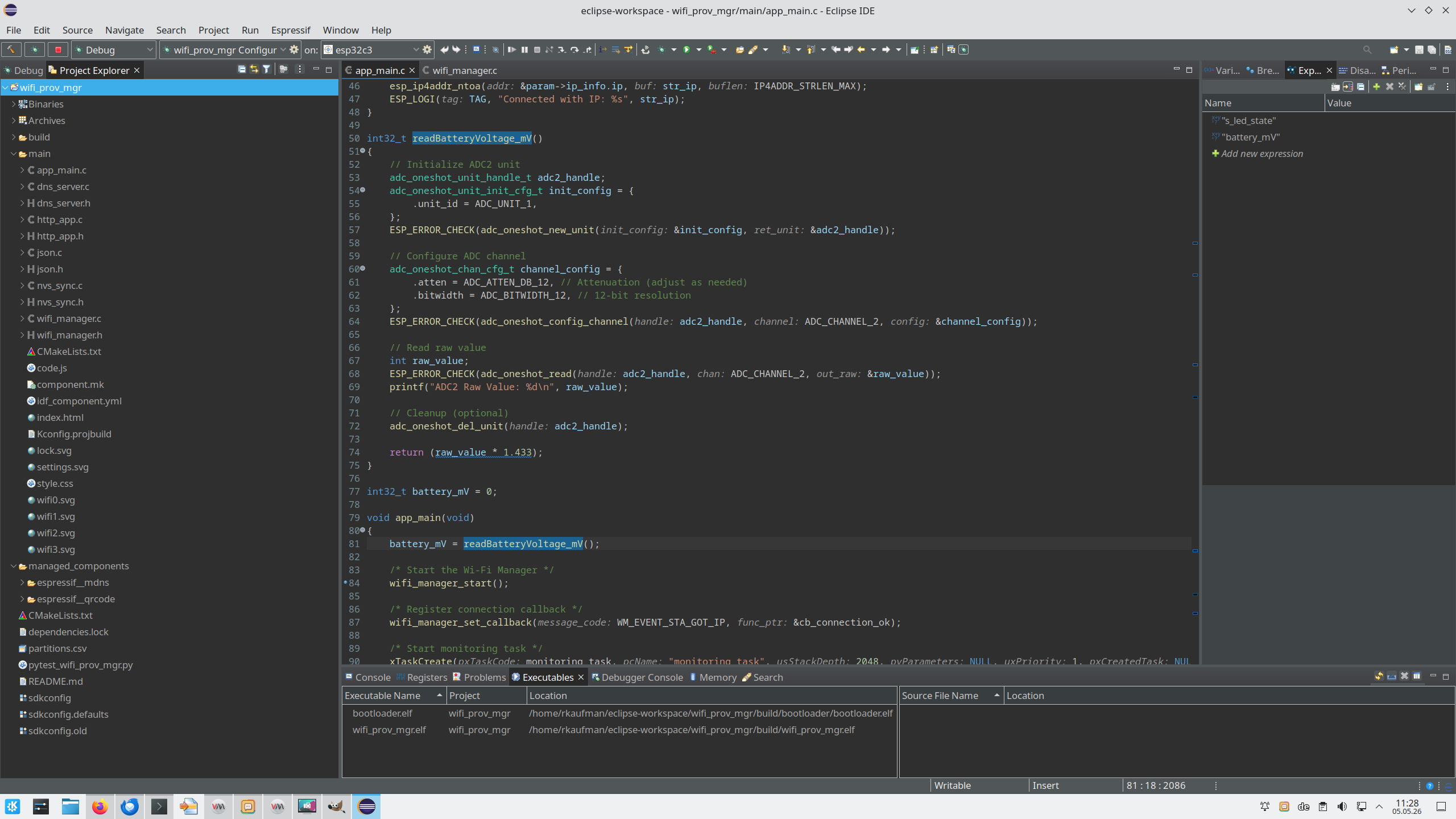
My solution: cross-platform hardware abstraction layers (HALs). I design the application logic to compile on both your target MCU and a PC environment. You can:
- Run unit tests on your desktop using standard C/C++ compilers.
- Simulate sensor inputs and actuator outputs without physical hardware.
- Validate algorithms at full speed before deploying to the embedded target. This approach reduces development time by 30-40% and catches architecture issues before PCB bring-up.
Resource-Constrained Optimization
Embedded systems often run on MCUs with 32 KB RAM and 128 KB flash — sometimes less. Efficient code is not optional; it is mandatory. My optimization methodology includes:
- Static memory allocation (no malloc on critical paths) to avoid fragmentation.
- Compiler flag tuning (-Os, link-time optimization) to reduce binary size.
- Profile-guided optimization to identify hot paths and inline critical functions.
- Power-aware coding — turning off peripherals, using sleep modes, and minimizing clock speed where possible. I also provide a memory footprint report with every deliverable so you can track resource usage.
Test-Driven Development for Embedded
Embedded software is notoriously difficult to test. Yet untested firmware is the leading cause of field failures and costly recalls. I apply test-driven development (TDD) adapted for embedded constraints:
- Unity and Ceedling for unit testing on target and in CI.
- CMock for mocking hardware dependencies (ADC, SPI, GPIO).
- Hardware-in-the-loop (HIL) testing for integration validation. The result: you receive not just code, but a regression test suite that runs automatically. New features do not break existing functionality.
Legacy System Modernization
Many industrial products run on 8-bit/16-bit microcontrollers from the 1990s. Chips go end-of-life. Supply chains shrink. Engineers who knew the assembly code retire. I specialize in legacy modernization:
- Porting assembly code to C/C++ while preserving timing and behavior.
- Migrating from proprietary architectures to ARM Cortex-M or RISC-V.
- Updating communication protocols (e.g., RS-232 to USB, CAN FD or Ethernet).
- Replacing obsolete components without a full system redesign. Modernization extends your product lifespan by 5-10 years at a fraction of the cost of a complete rewrite.
Ready to Start Your Embedded Project?
Whether you need a real-time controller, a cross-platform framework, or a legacy migration, I deliver production-ready code with English, Italian, or German support.
Where to start
If you already know what your firmware needs, go to Firmware & Driver Development. If the question is how the whole system is put together — node, backend, cloud, AI — that is Software Architecture & System Integration, and it is the part I can do remotely. Contact me if you want to talk it through.
 Telegram
  LinkedIn
  X (Twitter)
  Facebook
  VKontakte
  Whatsapp